

If you searched for pixelspinx.com and found several very different descriptions, you are not alone. Some websites describe it as a creator platform for writers, designers, and other digital creators. Other recent reviews describe it as a normal multi-topic content website. That difference makes the domain harder to understand than it should be.
The easiest way to sort this out is to stop relying on labels and look at what can actually be supported. Is Pixelspinx.com a publishing platform? Can you create an account? Can you publish your own work? And if you simply want to read its articles, how much should you rely on them?
If you are asking those questions, you are in the right place. We will deal with each one separately and use the available evidence to reach a practical answer.
What Is Pixelspinx.com Actually?
If the name Pixelspinx.com tells you almost nothing, start with the simplest question: what kind of website is it?
Recent examinations of the domain describe it as a broad, multi-topic content website rather than a clearly documented software service. One detailed review reported categories covering areas such as Automotive, Business, Finance, General, Health, Online Game, Technology, and Travel. Another recent review similarly described it as a WordPress-based blog that visitors can browse directly.
That matters because the word “platform” can make a website sound like something much more interactive than a regular blog.
A creator platform normally gives users a clear way to join, create a profile, publish their own work, or manage content. A content website can simply publish articles for visitors to read.
What the available evidence shows
The strongest recent descriptions of the actual domain point toward the second model: a general-interest website where visitors read articles covering different subjects. A September 2026 review says the available evidence supports describing Pixelspinx.com as a multi-topic informational blog rather than an interactive software service.
That does not mean every detail about the site is permanently settled. Websites change. A feature that is not visible today could appear later.
There is also a separate problem: many 2026 articles use almost identical language to describe Pixelspinx.com as a creator-focused publishing platform. Some of those articles make claims about publishing, creator branding, or monetization without showing a working public signup system or detailed official documentation.
So the safest description is based on what can actually be established:
Pixelspinx.com currently appears to function primarily as a multi-topic content website, while the stronger creator-platform claims circulating around it are not clearly supported by publicly visible features.
That distinction gives us a much better starting point.
Why the basic identity matters
Imagine you searched Pixelspinx.com because you wanted a place to publish your own articles.
If you assume it is a creator platform before checking, you may waste time looking for a dashboard, pricing page, or publishing tool that may not actually be available.
On the other hand, if you only want to read general articles, the situation is much simpler.
You can judge the individual content instead of expecting the site to work like a social publishing service.
So the first problem is resolved: Pixelspinx.com appears to be primarily a broad informational/content website based on the current evidence, not a clearly established self-service creator platform.
Now the next question becomes much more specific: why are so many websites calling it a creator platform?
Why Is Pixelspinx.com Described as a Creator Platform in Some Places?
This is where the real confusion begins.
If several websites use phrases like “creator platform,” “publishing platform,” or “creator hub,” it is natural to assume those descriptions must have come from Pixelspinx.com itself.
But repeating a description does not prove that the description is accurate.
Several recent pages make similar claims about Pixelspinx.com. For example, some describe it as a place for independent writers, designers, educators, and small businesses to publish long-form content. Others compare its supposed model with services such as Substack or Patreon.
The problem is that these descriptions do not always point readers to a public feature that demonstrates the claim.
What would normally prove a creator platform?
Think about a website that genuinely lets you publish your own content.
You would normally expect to find at least some obvious signs:
- A registration or signup page
- A user login
- A creator profile or dashboard
- A publishing editor
- Information about how content is submitted
- Terms for creators or contributors
- Pricing or monetization details if money is involved
- Clear instructions explaining how the system works
These features do not need to look exactly the same on every platform. But there should usually be some practical way for a new user to understand how to become a creator.
That is the missing piece in many of the Pixelspinx.com descriptions.
Recent examinations of the domain reported no publicly visible creator dashboard, membership system, or self-service publishing interface.
Does that prove nobody can contribute?
No.
This is an important distinction.
A website could accept guest articles, private submissions, or content through a process that is not available to every visitor.
One recent review notes a third-party guest-post marketplace listing Pixelspinx.com for contributed articles. But accepting contributed articles is not the same thing as operating an open creator platform where anyone can register, create a profile, and publish independently.
So we should not jump from:
“I cannot see a public creator dashboard”
to:
“Nobody can ever contribute to this website.”
The evidence does not support that stronger claim.
Why might the same description appear on many websites?
There is a simple possibility: one description gets published, then other articles repeat or rewrite it.
Once several pages use the same basic wording, a searcher can easily assume the information has been independently confirmed.
That is why direct evidence matters more than the number of websites making the same statement.
If five pages say Pixelspinx.com is a creator platform but none of them show you where the creator system actually exists, the repetition itself does not solve the question.
The practical answer: treat the “creator platform” label as a claim that needs supporting evidence, not as an established fact simply because multiple articles repeat it.
That brings us to the question that can settle the issue more directly:
What can a normal visitor actually do on Pixelspinx.com?
What Can You Actually Do on Pixelspinx.com?
If your goal is simply to use the website, you do not need a long theory about its business model. You need to know what happens when you visit it.
Recent reviews describe Pixelspinx.com as a conventional content site where visitors can open and read articles through a normal browser. One review reported no paywall, registration requirement, or membership tier for ordinary visitors.
The site’s reported subject areas are also broad rather than focused on one specialist topic. Recent examinations mention categories such as business, finance, health, technology, travel, automotive content, gaming, and general subjects.
Is it mainly a reading website?
Based on the available evidence, that is the clearest way to understand it.
You can approach the domain as a place where articles are published and read.
That is different from visiting a service whose main purpose is to give you a workspace, creator account, portfolio, or publishing dashboard.
This difference is easy to miss because both types of websites may use words such as “content,” “creators,” or “publishing.”
The actual user experience matters more than the label.
Do you need an account just to read?
Recent examinations reported that ordinary visitors could access articles without creating an account.
That makes the reader experience fairly straightforward: you find an article, open it, and read it.
Still, because website features can change, treat this as a current observation rather than a permanent rule.
If the site later adds registration or membership features, the live domain should take priority over an older review.
What about the different content categories?
The broad range of subjects is another clue about the site’s identity.
A website covering technology, finance, health, travel, business, automotive subjects, gaming, and other general topics is operating differently from a narrowly focused creator service.
The variety does not automatically tell you whether the content is good or bad. It simply tells you that you should judge each article on its own evidence.
For example, a technology article may need different sources from a health article. A travel post may be useful for general ideas but still need checking for current prices, rules, or opening times.
What does this mean for you?
If you came to Pixelspinx.com looking for general reading, the site can be understood as a multi-topic content publication.
If you came expecting a creator dashboard, paid membership system, or independent publishing workspace, you should not assume those features exist simply because another article says they do.
The problem is now clearer: the website appears useful primarily as a place to browse published content, while the public evidence for a full creator system remains limited.
That leads to the next practical question.
Can You Sign Up or Publish Your Own Content on Pixelspinx.com?
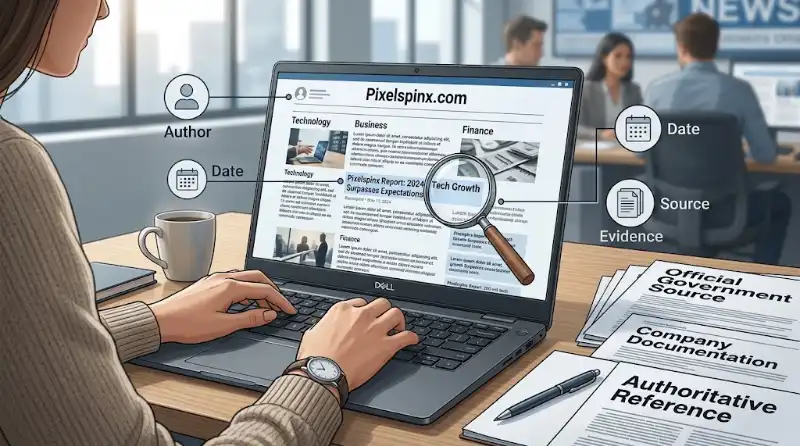
If you are considering Pixelspinx.com as a place to publish your own work, this is the point where you should slow down.
A description saying “creator platform” is not enough. You need to know whether there is an actual path from visitor to creator.
Recent examinations reported that they could not find a public creator registration process, publishing dashboard, membership system, or self-service publishing interface on the domain.
What should you expect from a real self-service publishing system?
A self-service system normally lets you do something like this:
- Create an account.
- Set up a profile.
- Open a writing or publishing dashboard.
- Create or upload content.
- Publish or submit the content.
- Manage your published work later.
The exact process varies, but the important part is that the user can see how the system works.
If those features are not publicly visible, calling the website a full self-service creator platform becomes difficult to support.
Could Pixelspinx.com still accept outside content?
Possibly.
A recent investigation found a third-party guest-post marketplace listing Pixelspinx.com for contributed articles.
But there is a major difference between:
“The website may accept contributed articles”
and:
“Anyone can sign up and independently publish content through a creator dashboard.”
Those are not the same service.
So if your goal is guest posting, you would need to verify the current submission route and terms directly before sending anything.
If your goal is to build a creator profile and independently manage a library of your own posts, the available evidence does not currently establish that Pixelspinx.com provides that type of system.
What should you do before submitting content?
Do not send personal information or valuable original work just because a third-party article says the site accepts creators.
First confirm:
- where submissions are made,
- who receives them,
- whether there are submission rules,
- whether your content remains yours,
- whether publication is free or paid,
- whether any payment is promised,
- and what happens after submission.
You know, these questions sound basic, but they can save you from a lot of confusion later.
The practical answer: current public evidence does not establish a normal self-service creator signup and publishing system. A contribution arrangement may be different, but it should be verified separately before you submit anything.
Who Is Behind Pixelspinx.com?
Once you know what a website does, the next reasonable question is: who is responsible for it?
This matters because a clear owner or editorial team can make it easier to understand who publishes the information and where to go when something needs correction.
For Pixelspinx.com, the public picture is less clear.
Recent examinations reported limited public information about the site’s founder or ultimate owner. One review says articles have appeared under the publishing label “Adoosylinks,” but a byline or username alone does not prove that person or label is the legal owner of the domain.
Does a visible author name prove ownership?
No.
An author can write for a website without owning it.
Likewise, an editorial username can represent a publishing account rather than a legally registered company.
So it is better to keep these facts separate:
Author information tells you who is shown as publishing an article.
Ownership information tells you who controls the domain or business.
Editorial information tells you who manages or reviews the site’s content.
Those three things can be the same, but they do not have to be.
What does domain information tell us?
A third-party domain-analysis service currently reports privacy-protected WHOIS information and lists a registration date of August 21, 2023. It also reports a valid SSL certificate.
That information can help establish technical and registration details, but it does not tell us everything about the people operating the publication.
For example, the age of a domain does not prove the quality of its articles.
Likewise, a hidden WHOIS record does not by itself prove that a website is fraudulent. Privacy services are used by many legitimate domain owners too.
So what can we actually say about the operator?
The careful answer is:
Publicly available information reviewed for this article does not clearly establish the individual founder or full ownership structure of Pixelspinx.com.
That is a transparency observation, not a claim that the website is automatically untrustworthy.
This distinction matters because the next question is different again:
Even if you can visit the site safely, should you trust everything you read there?
Is Pixelspinx.com Safe to Visit?
If your main concern is simply, “Can I open this website without putting my device or information at unnecessary risk?” that is a different question from whether the site’s articles are trustworthy.
A website can be technically safe to visit and still publish information that needs checking. The two issues should not be mixed together.
One current third-party website checker reports that Pixelspinx.com has a valid SSL certificate. It also reports that the site’s WHOIS information is hidden and that the domain has relatively limited traffic.
What does HTTPS actually tell you?
HTTPS is useful because it helps protect the connection between your browser and the website.
When you see the padlock in your browser, it generally means the connection is encrypted. That is a good technical sign.
But there is an important limit.
HTTPS does not prove that the website’s owners are honest, its articles are accurate, or its business claims are genuine.
Think of it this way: a locked door can protect a room, but the lock does not tell you what is inside the room.
So if you are checking Pixelspinx.com, treat HTTPS as one technical signal, not as a complete trust test.
What should you be careful about?
Normal browsing is different from giving a website sensitive information.
If a page asks you to:
- download an unexpected file,
- install unknown software,
- enter banking information,
- provide a password you use elsewhere,
- share unnecessary personal details,
- or follow a suspicious redirect,
stop and check what you are being asked to do before continuing.
This is especially important when an article sends you to another website. A link inside an article does not automatically have the same level of trust as the original domain.
So, is the site safe?
The available third-party technical signals do not by themselves establish that Pixelspinx.com is malicious. At the same time, those signals cannot guarantee that every page or external link is harmless.
For ordinary reading, the sensible approach is simple: keep your browser updated, avoid unexpected downloads, do not reuse important passwords, and do not provide sensitive information unless you understand exactly who is collecting it and why.
That answers the visit-safety question.
But you may actually be asking something more important:
Can I trust the information I read there?
Is Pixelspinx.com Trustworthy Enough to Rely On?
This is where many website reviews become too simple.
They see HTTPS, a working domain, or a normal-looking website and jump straight to “legit.” But being reachable online is not the same as being a reliable information source.
For Pixelspinx.com, the better question is:
What evidence does a particular article provide for the information it gives you?
Look at the article, not just the domain
A website can publish ten useful articles and one weak article.
Another website can have a professional design but still make unsupported claims.
So instead of trying to give the entire domain one permanent trust label, look at the individual content.
Ask:
- Who wrote this?
- When was it published or updated?
- Does it name its sources?
- Can you open those sources?
- Are important claims supported by evidence?
- Does the writer appear qualified for the subject?
- Is the information current?
These questions tell you much more than the site’s appearance.
General information is different from high-stakes information
Suppose you read a general article about a word, travel destination, hobby, or everyday topic.
You may only need basic context.
Now imagine the article gives you medical advice, financial instructions, legal information, or a claim about a government rule.
The standard should be much higher.
For those topics, you should look for authoritative sources such as government agencies, recognized professional organizations, official company documentation, research papers, or other primary sources.
A general-interest blog should not automatically replace the source responsible for the actual rule, service, or medical guidance.
What does the available Pixelspinx.com evidence suggest?
Recent reviews describe the site as a broad informational publication with many unrelated subject areas.
That does not make the content wrong.
It simply means you should not assume that every article has specialist-level authority just because it appears on the same domain.
The practical answer: Pixelspinx.com can be treated as a source of general online content, but the reliability of an individual article should be judged from its author, evidence, sources, date, and subject matter rather than from the domain name alone.
That gives us a much more useful answer than a simple “yes” or “no.”
How Can You Tell Whether a Pixelspinx.com Article Is Reliable?
If you have already opened an article and are wondering, “Should I believe this?”, you do not need to investigate the entire website.
You can check the article itself.
Start with the original source
Look for claims that contain specific facts.
For example, if an article says a company changed its policy, find the company’s own announcement.
If it says a government rule changed, find the government agency responsible for that rule.
If it gives medical information, check a recognized health authority or medical organization.
If it discusses a product specification, compare it with the manufacturer’s official documentation.
The closer you get to the original source, the less you depend on someone else’s summary.
Check whether the article identifies its author
A named author gives you something to investigate.
You can ask:
- Does the author have relevant expertise?
- Have they written about this subject before?
- Is there an author profile?
- Does the article explain where its information came from?
A missing author does not automatically mean the article is false.
But when a topic requires expertise, the lack of author information gives you less evidence about who stands behind the claim.
Check the date
Online information can become outdated surprisingly fast.
A page about a general definition may stay useful for years.
A page about prices, software features, company policies, regulations, security practices, or current services can change much faster.
So if the article makes a time-sensitive claim, check when it was published or updated.
If there is no clear date, be more careful with information that changes frequently.
Follow important claims back to evidence
This is one of the strongest checks you can make.
Imagine an article says:
“The company now requires users to verify their identity.”
Do not stop at that sentence.
Look for the source.
If there is a link, open it.
If there is no source, search for the company’s official policy.
Then compare the two.
If the original source supports the claim, you have stronger evidence.
If it does not, the claim should not be treated as established simply because it appears in an article.
Use a higher standard for important decisions
If the information could affect your:
- money,
- health,
- legal position,
- employment,
- security,
- or personal data,
do not rely on one general article.
Use the article as a starting point, then confirm the important part with a primary or authoritative source.
That is a much safer habit than trying to decide whether an entire domain is “good” or “bad.”
What Should You Do If Pixelspinx.com Gives You Information You Cannot Verify?
Sometimes an article sounds convincing, but you cannot find the source behind an important claim.
This is where many readers make a simple mistake: they either believe the claim immediately or reject the entire website.
You do not have to do either.
First, separate the claim from the evidence
Write down what the article is actually claiming.
Then ask:
What evidence would prove this?
For example:
If the article says a company offers a particular service, the company’s official website should normally be able to confirm it.
If it says a law has changed, the responsible government source should be able to confirm the change.
If it says a product has a certain feature, the manufacturer’s documentation should help confirm it.
This turns a vague feeling of doubt into a specific verification task.
Next, search for the primary source
Do not just search the same sentence and pick another blog that copied it.
Try to find the organization responsible for the information.
That might be:
- an official government website,
- a company’s own documentation,
- a university,
- a recognized professional body,
- a research publication,
- or another direct source.
This is especially useful when several websites repeat exactly the same claim.
Ten repeated articles are not necessarily ten independent sources.
What if you still cannot verify it?
Then treat the information as unverified.
You do not need to prove that it is false.
You simply do not have enough evidence to treat it as established fact.
That is a useful middle position.
It lets you keep researching without making a decision based on information you cannot confirm.
What if the article is only for casual reading?
The level of checking can match the importance of the information.
If you are reading a general-interest article for ideas or background, you may not need to verify every small statement.
If the information will affect your money, health, legal situation, or security, verify the important claims before acting on them.
The practical answer: when a claim cannot be verified, do not turn uncertainty into certainty. Find the original source if the claim matters. If you cannot confirm it, treat it as unverified and keep looking.
What Does Pixelspinx.com Mean for You as a Reader?
By now, the different questions around Pixelspinx.com should be easier to separate.
The first question was its identity.
Current third-party research describes the domain primarily as a multi-topic content website, while some other articles describe it as a creator platform. The public evidence reviewed here does not clearly establish the full self-service creator system that those descriptions suggest.
The second question was what you can actually do there.
The available descriptions point more clearly toward reading published content than toward using a public creator dashboard.
The third question was safety.
Technical signals such as HTTPS can tell you something about the connection, but they do not prove the quality or accuracy of the content.
The fourth question was trust.
That needs to be judged at the article level. Check the author, date, sources, evidence, and the importance of the claim.
So what is the sensible way to use the site?
If you are browsing Pixelspinx.com for general information, you can treat its articles as starting points for learning about a subject.
When a claim matters, follow it back to a stronger source.
For finance, health, legal matters, government rules, security, or other high-stakes topics, go beyond a general-interest article and confirm the information with the appropriate primary or authoritative source.
And if you came to Pixelspinx.com because you wanted to become a creator, do not assume that the phrase “creator platform” means there is a public self-service publishing system. Verify the actual signup, submission, and publishing process first.
That small distinction can save you from following the wrong path.
FAQ: Pixelspinx.com
Does Pixelspinx.com appear to be a general blog?
Current third-party reviews describe it as a broad multi-topic content website covering subjects such as technology, business, finance, health, travel, automotive topics, gaming, and other general subjects.
Is Pixelspinx.com the same as every website or brand using a similar PixelSpin name?
No assumption should be made from the name alone. When researching the site, use the exact pixelspinx.com domain and verify that information actually belongs to that domain.
Does a hidden WHOIS record prove Pixelspinx.com is a scam?
No. A privacy-protected WHOIS record can limit public ownership information, but it is not by itself proof of fraud or malicious activity.
Should you use Pixelspinx.com as your only source for important information?
It is better not to rely on one general-interest website for high-stakes information. For medical, financial, legal, government, or security-related claims, check the appropriate primary or authoritative source as well.
Why do some articles call Pixelspinx.com a creator platform?
Some recent articles describe it that way, but other investigations report that publicly visible evidence of a normal self-service creator dashboard or publishing system is limited. That difference is why the label should be treated as a claim that needs verification rather than accepted automatically.
The Bottom Line on Pixelspinx.com
If you searched Pixelspinx.com because you wanted a simple answer, the main issue is not the name of the website. It is the conflicting information surrounding it.
The available evidence points toward a multi-topic content website, while several third-party pages describe it as a creator-focused publishing platform. Those descriptions should not be treated as equal to direct evidence of a public creator system.
For normal reading, the most useful approach is to judge the individual article you are reading. Check its source, author, date, and supporting evidence. If the subject involves money, health, law, government rules, or security, confirm the important claims elsewhere.
And if you are considering Pixelspinx.com as a place to publish your own work, verify the actual submission or publishing process before assuming that a creator dashboard exists.
Honestly, that is the simplest way to deal with a site surrounded by mixed descriptions: separate what is verified from what is claimed, then make your next decision based on the evidence you can actually check.

I’m James Carter, a professional writer at Meanexplainer.com, where I write about word meanings, slang, phrases, grammar, and everyday language.
I created my writing approach around one simple idea: understanding a word should be easy, practical, and useful. My articles go beyond basic definitions by explaining how words and phrases are actually used in conversations, texting, social media, and everyday writing.
At Meanexplainer.com I focus on turning confusing language questions into clear, straightforward answers. I regularly cover modern slang, commonly confused words, expressions, grammar, and the changing ways people communicate online.
My goal is to help readers find the right meaning, understand the context, and use words and phrases with confidence.


